

Public and commercial spaces must prioritize both accessibility and safety. One critical aspect often overlooked during construction and infrastructure design is the installation of proper gratings. Gratings are used in sidewalks, drainage systems, and building entrances to manage water flow and support pedestrian traffic. However, not all gratings are designed equally. Two major safety considerations are ADA compliance and heel-proof design. Understanding these concepts is essential for anyone involved in facility planning, civil engineering, or urban design.
Understanding ADA Compliance in Gratings
The Americans with Disabilities Act (ADA) sets accessibility standards to ensure that public spaces are safe and usable for individuals with disabilities. In terms of gratings, ADA compliance focuses on preventing hazards for wheelchair users, people using mobility aids, and pedestrians in general.
Key ADA Grating Requirements
-
Opening Size:
ADA standards specify that grating openings should not allow a sphere larger than 1/2 inch (12.7 mm) to pass through. This prevents wheels of mobility devices or small heels from getting caught. -
Orientation of Grating Slots:
If elongated slots are used, they must be perpendicular to the direction of travel. This prevents wheels or cane tips from slipping into the gaps. -
Surface Stability and Slip Resistance:
The grating surface must be stable, firm, and slip-resistant under wet and dry conditions to minimize the risk of accidents. -
Level Transitions:
Gratings should be flush with the surrounding surface to ensure smooth movement for wheelchairs, walkers, and strollers.
ADA-compliant gratings make sidewalks, ramps, and entryways safer and more inclusive. Proper design ensures compliance with federal regulations and reduces liability for property owners.
What Are Heel-Proof Gratings?
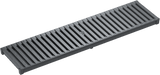
Heel-proof gratings are designed to protect pedestrians wearing heeled footwear, such as pumps or stilettos, from tripping or getting stuck. This design is especially relevant in high-traffic urban areas, shopping centers, and corporate complexes.
Defining a Heel-Proof Grating
A grating is considered heel-proof when its openings are less than 1/4 inch wide in the direction of travel. This small spacing prevents thin heels from penetrating the grating surface.
Where Heel-Proof Gratings Are Used
-
Pedestrian Walkways: Common in sidewalks and plazas
-
Public Entrances: Found at building thresholds and courtyards
-
Parking Lots and Transit Areas: Used in drainage channels to manage runoff safely
-
Commercial Buildings: Ensures comfort and safety for employees and visitors
Heel-proof gratings contribute to both aesthetic appeal and functional safety, combining sleek design with structural reliability.
Differences Between ADA and Heel-Proof Gratings
While both ADA and heel-proof gratings aim to improve pedestrian safety, their design standards differ slightly:
|
Feature |
ADA Gratings |
Heel-Proof Gratings |
|
Purpose |
Accessibility for all users, especially those with disabilities |
Prevent footwear from catching or slipping |
|
Maximum Opening Size |
1/2 inch (12.7 mm) |
1/4 inch (6.3 mm) |
|
Orientation |
Perpendicular to direction of travel |
Can vary depending on design |
|
Applicable Areas |
Ramps, sidewalks, crossings |
Urban areas, malls, commercial spaces |
Both types can coexist in one project. In fact, many modern designs combine ADA compliance with heel-proof construction to cover all safety aspects.
Materials Used in ADA and Heel-Proof Gratings
Choosing the right material is crucial for long-lasting performance and durability. Common materials include:
-
Stainless Steel: Corrosion-resistant and ideal for outdoor use.
-
Galvanized Steel: Provides strength and protection against rust.
-
Aluminum: Lightweight, easy to install, and suitable for decorative use.
-
FRP (Fiber Reinforced Plastic): Offers slip resistance and electrical insulation.
-
Cast Iron: Durable and ideal for heavy loads, though heavier to handle.
Each material has its benefits depending on the installation environment, load requirements, and aesthetic goals.
Best Practices for Safer Grating Installations
Ensuring a safe and compliant grating installation involves more than just selecting the right type. The following practices are recommended:
-
Follow ADA and Local Codes:
Always refer to federal ADA guidelines and local building codes for exact specifications. -
Check Load Ratings:
Match grating strength to expected pedestrian or vehicular loads to prevent deformation or breakage. -
Use Slip-Resistant Surfaces:
Apply anti-slip coatings or choose serrated surfaces for added traction, especially in wet zones. -
Ensure Proper Alignment:
Gratings should be level with adjacent surfaces to prevent tripping hazards. -
Regular Maintenance:
Keep gratings clean and clear of debris to maintain proper drainage and slip resistance. -
Consult Professionals:
Engineers or certified contractors should oversee installation to guarantee compliance and safety.
Benefits of ADA and Heel-Proof Gratings
-
Improved Accessibility: Safe for all pedestrians, including those using mobility devices.
-
Reduced Accident Risks: Prevents slips, trips, and footwear entrapment.
-
Enhanced Durability: Designed for long-term use in high-traffic areas.
-
Compliance Assurance: Meets ADA and building safety requirements.
-
Aesthetic Integration: Available in multiple finishes and patterns to suit architectural styles.
Conclusion
Safety and accessibility are non-negotiable in modern infrastructure design. ADA and heel-proof gratings play a vital role in achieving these goals by minimizing risks and ensuring that public spaces are inclusive for all users. When properly designed and installed, these gratings prevent accidents, meet legal requirements, and enhance the user experience in any environment.
Whether used in a busy city plaza, an office complex, or a residential walkway, ADA and heel-proof gratings ensure that safety and functionality go hand in hand. Investing in compliant, durable, and professionally installed gratings is a long-term commitment to public safety and accessibility the cornerstone of responsible urban design.
