

Effective drainage is essential in areas exposed to constant vehicle movement and high load pressure. Roads, highways, parking lots, industrial facilities, airports, and loading docks all require drainage systems that can manage large volumes of surface water without compromising safety or structural integrity. Poor drainage in such environments can lead to water pooling, pavement damage, vehicle accidents, and costly maintenance. explains What Drainage Solutions Work for Heavy Traffic Areas?, focusing on system types, materials, load ratings, and design considerations that ensure long-term performance.
Understanding Drainage Needs in Heavy Traffic Zones
Heavy traffic areas differ from residential or light-use spaces in several ways. They experience frequent loads from cars, trucks, and heavy machinery, combined with exposure to rainwater, debris, oils, and sediments.
Why Standard Drainage Systems Are Not Enough
Conventional drainage solutions may fail under constant load pressure. Cracked channels, collapsed grates, and blocked outlets are common when systems are not designed for heavy-duty use. This makes it essential to choose drainage solutions engineered specifically for traffic-bearing environments.
Key Challenges in High-Traffic Drainage
-
High surface water runoff during rainfall
-
Repeated heavy loads causing structural stress
-
Increased debris accumulation
-
Safety risks due to standing water or uneven surfaces
Types of Drainage Solutions for Heavy Traffic Areas
Several drainage systems are suitable for high-load applications. The choice depends on traffic volume, vehicle weight, surface material, and site layout.
Linear Drainage Systems
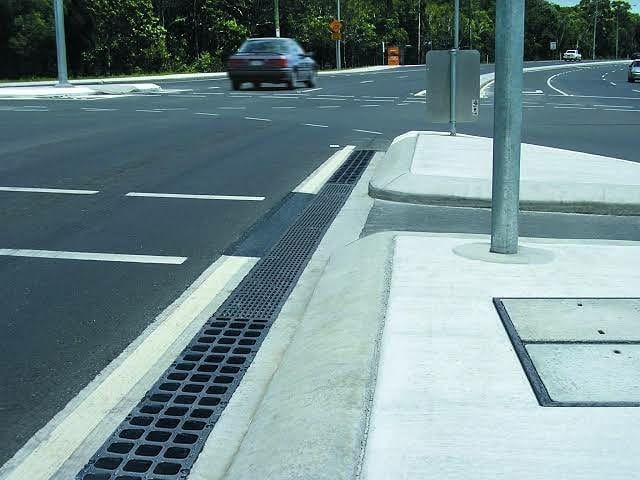
Linear drainage systems are one of the most effective solutions for heavy traffic areas. These systems consist of long channels installed along roads, parking areas, or pavement edges.
Advantages of linear drains:
-
Efficient collection of surface water over large areas
-
Reduced need for multiple point drains
-
Smooth water flow direction, minimizing pooling
Linear drains are commonly used in highways, industrial yards, and commercial parking facilities.
Trench Drain Systems
Trench drains are a type of linear drainage designed specifically for high-load environments. They feature reinforced channels and heavy-duty grates that can withstand constant vehicle movement.
Common applications include:
-
Loading docks
-
Airports
-
Bus terminals
-
Manufacturing plants
Trench drains are particularly effective where water, chemicals, or debris are frequently present.
Slot Drain Systems
Slot drains have a narrow surface opening connected to a hidden channel below. While the visible opening is minimal, the system underneath is robust and load-bearing.
Benefits of slot drains:
-
Reduced surface disruption
-
Easy integration with concrete or asphalt
-
Suitable for areas with strict surface design requirements
Importance of Load Ratings and Compliance
When selecting drainage solutions for heavy traffic areas, load rating is one of the most critical factors.
Understanding Load Classifications
Drainage products are classified based on their load-bearing capacity. These classifications help determine whether a system can safely support passenger vehicles, commercial trucks, or industrial machinery.
Choosing a system with an appropriate load rating ensures:
-
Structural stability
-
Reduced risk of grate failure
-
Compliance with safety standards
Why Overloading Is a Common Mistake
Installing drainage systems rated below actual traffic loads can result in cracked channels, displaced grates, and premature system failure. Proper assessment during the design stage prevents such issues.

Material Selection for Long-Term Performance
Materials play a major role in the durability and performance of drainage systems in high-traffic environments.
Channel Materials
-
Reinforced concrete: Suitable for extreme loads and long-term use
-
Polymer concrete: Offers high strength with lower weight and resistance to chemicals
-
High-density plastic: Used in moderate heavy-traffic areas when reinforced properly
Grate Materials
-
Ductile iron: Common for roads and highways due to high strength
-
Steel grates: Suitable for industrial zones with controlled loads
-
Composite grates: Used where corrosion resistance is required
Design Considerations for Effective Drainage
Even the strongest drainage system will fail if poorly designed or installed.
Proper Slope and Water Flow
Drainage channels must be installed with the correct slope to ensure smooth water movement toward outlets. Inadequate slope can lead to water stagnation and debris buildup.
Placement and Layout
Drainage systems should be positioned along traffic paths, low points, and surface edges where water naturally accumulates. Strategic placement reduces surface water pressure and extends pavement life.
Maintenance Accessibility
Heavy traffic areas require regular maintenance. Systems should allow easy access for cleaning without disrupting traffic flow for extended periods.
Benefits of Using the Right Drainage Solution
Choosing the correct drainage system for heavy traffic areas provides both short-term and long-term benefits.
Safety Improvements
Efficient drainage reduces water pooling, lowering the risk of skidding, hydroplaning, and pedestrian accidents.
Extended Surface Life
Proper water management prevents erosion, cracking, and weakening of roads and pavements.
Lower Maintenance Costs
Durable systems designed for heavy loads require fewer repairs and replacements, resulting in cost savings over time.
Conclusion
Understanding What Drainage Solutions Work for Heavy Traffic Areas? involves evaluating traffic load, environmental conditions, material strength, and system design. Linear drains, trench drains, and slot drainage systems, when combined with correct load ratings and proper installation, provide reliable water management in demanding environments.
By selecting drainage solutions built for heavy use, facility managers, engineers, and planners can improve safety, protect infrastructure, and ensure long-term operational efficiency.
