

Urban trees need sufficient soil, water, air, and protection to grow properly. However, planting trees in pavements, commercial walkways, public plazas, and streetscapes can create practical challenges. Open soil around a tree may become compacted, collect litter, or present a walking hazard. A tree grate provides a structured solution by covering the planting area while leaving space for the tree trunk and root system.
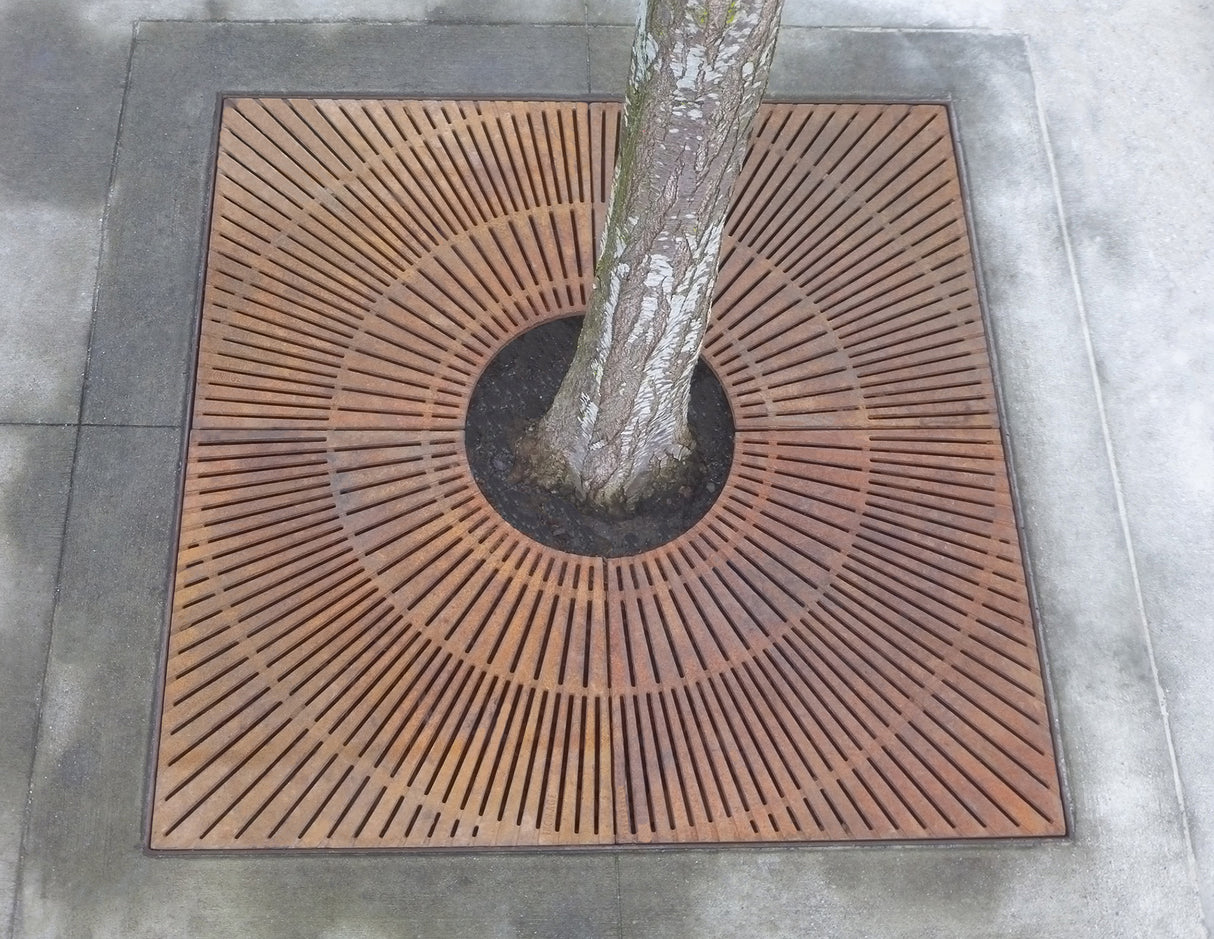
The CORONA 4' x 4' heel-proof tree grate is designed to support urban tree planting while maintaining a stable and accessible pedestrian surface. Its square dimensions allow it to fit into commonly used tree pits, while its heel proof pattern reduces the size of surface openings.
What Is a CORONA 4' x 4' Heel-Proof Tree Grate?
A CORONA 4' x 4' heel proof tree grate is a protective cover installed around the base of a tree. It typically sits level with the surrounding pavement and covers the exposed soil within the tree pit.
The grate includes openings that allow rainwater, irrigation, air, and small amounts of organic material to reach the soil. At the same time, it creates a firm walking surface around the tree.
The term “heel proof” refers to the narrow spacing between the grate openings. Smaller openings help reduce the risk of narrow heels, walking aids, bicycle tyres, or other small objects becoming trapped.
How Does a CORONA 4' x 4' Heel-Proof Tree Grate Work?
To answer the question, How Does a CORONA 4' x 4' Heel Proof Tree Grate Work?, it is helpful to examine its main functions. The grate covers the open tree pit, distributes pedestrian pressure across its frame, allows essential resources to reach the soil, and helps protect the tree’s root zone from direct foot traffic.
The grate is usually supported by a frame installed around the tree opening. When pedestrians walk across it, the frame and grate sections carry the load rather than transferring concentrated pressure directly to the soil.
Its patterned openings provide a balance between surface coverage and soil access. Water can drain through the openings instead of collecting on the surface. Air can also circulate into the soil, supporting root health.
Protecting the Root Zone
Tree roots near paved areas are vulnerable to soil compaction. Repeated foot traffic can compress the soil, reduce air spaces, and make it more difficult for water to reach the root system.
A tree grate limits direct contact between pedestrians and the soil. By keeping people above the planting area, it helps preserve soil structure and protects shallow roots from repeated pressure.
The grate can also discourage people from placing heavy objects directly against the tree trunk or stepping into the tree pit.
Supporting Pedestrian Safety
Open tree pits may interrupt an otherwise level pavement. Their edges can create trip hazards, particularly in busy public areas or poorly lit locations.
A properly installed 4' x 4' grate creates a more continuous walking surface. The heel proof design provides narrower gaps than traditional open-pattern grates, making it more suitable for areas used by people wearing different types of footwear.
This design may also improve movement for pedestrians using canes, pushchairs, wheeled luggage, or mobility equipment. However, the complete installation should still be reviewed against applicable accessibility and building requirements.
Why Is the 4' x 4' Size Important?
The 4-foot by 4-foot format provides a defined square planting area around the tree. This size can be suitable for pavements, courtyards, pedestrian zones, retail developments, and other planned landscapes where space must be used efficiently.
The dimensions give the tree access to an open soil area while allowing the surrounding pavement to remain organised. Landscape architects and contractors can coordinate the grate with paving layouts, kerbs, irrigation systems, and underground soil structures.
The selected grate size should match the tree species, expected trunk growth, available rooting space, and site design. A 4' x 4' surface opening does not necessarily represent the full underground soil volume. In many urban projects, roots may extend into prepared soil areas beneath the surrounding pavement.
Key Components of the Tree Grate System
A complete tree grate installation generally includes more than the visible grate.
Grate Sections
The surface is often divided into removable sections. This makes installation easier and may allow access to the soil for inspection, cleaning, irrigation, or maintenance.
Supporting Frame
The frame holds the grate in position and transfers loads to the surrounding structure. It must be installed evenly to prevent movement, rocking, or changes in surface level.
Central Tree Opening
The centre opening provides clearance for the tree trunk. Depending on the product design, the opening may be adjustable or expandable to accommodate future trunk growth.
Adequate clearance is important because the grate should not rub against or restrict the trunk as the tree matures.
Installation Considerations
Correct installation is essential for the grate to function as intended. The frame should be level with the adjoining pavement, properly supported, and aligned with the tree pit.
Contractors should check drainage conditions before installation. Although water can pass through the grate, poor soil drainage may still cause waterlogging below the surface.
The tree should also be positioned centrally, with sufficient space between the trunk and the grate opening. Irrigation lines, root barriers, structural soil systems, and underground utilities should be coordinated during the planning stage.
Maintenance Requirements
Routine maintenance helps keep the tree grate functional and visually orderly. Leaves, litter, soil, and other debris may collect in the openings and should be removed periodically.
The grate should be inspected for movement, corrosion, cracks, damaged sections, or uneven edges. The central opening must also be monitored as the tree trunk grows.
Where necessary, sections may need to be adjusted or replaced to prevent contact with the trunk. Soil beneath the grate should be checked for compaction, poor drainage, or reduced water penetration.
Where Can This Tree Grate Be Used?
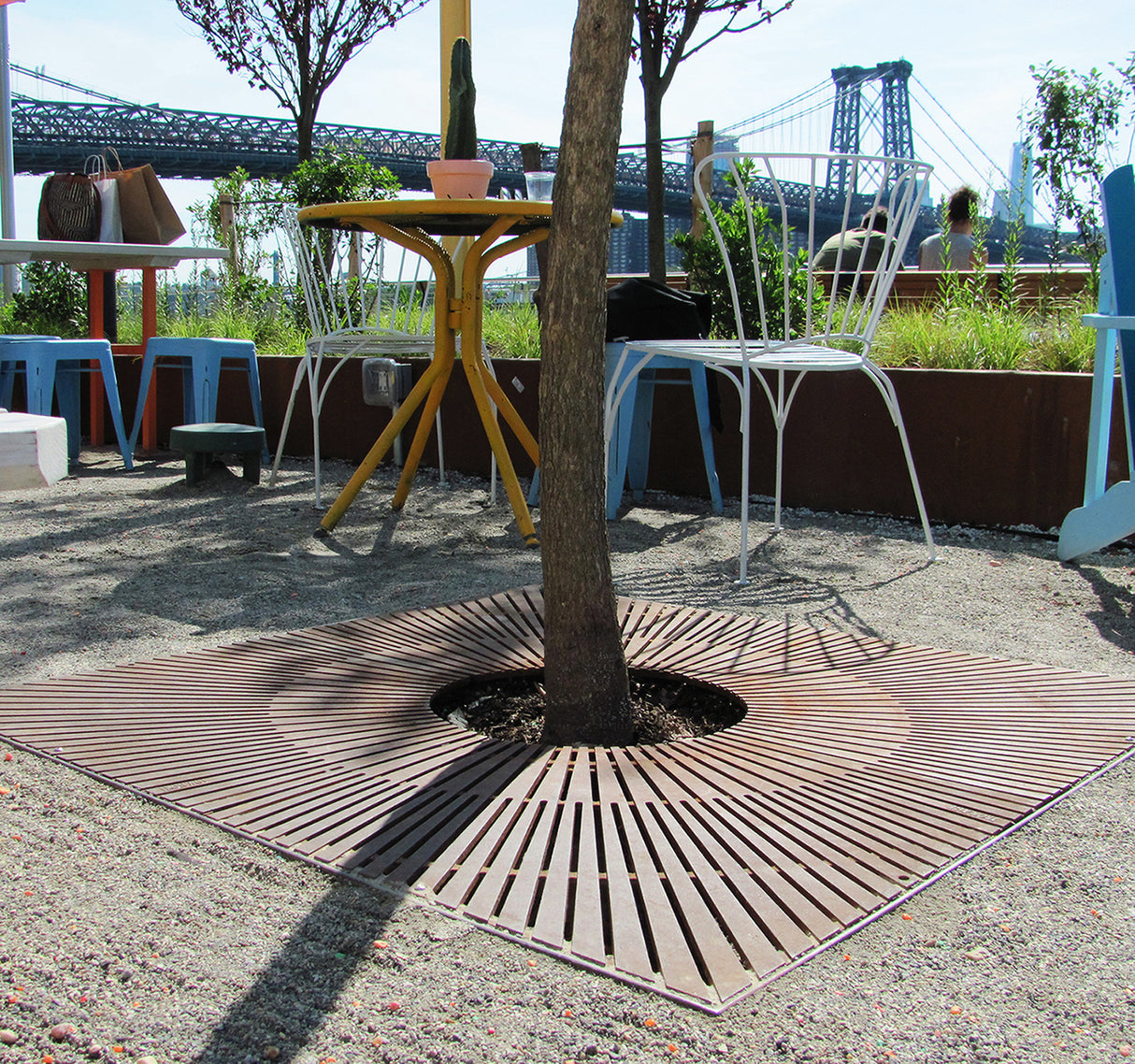
A CORONA 4' x 4' heel proof tree grate may be considered for several types of public and commercial environments, including:
-
Shopping centres and retail walkways
-
Office developments
-
Public plazas
-
Parks and civic spaces
-
Hotel entrances
-
Educational campuses
-
Pedestrian streets
-
Transport facilities
The final product specification should reflect expected pedestrian volumes, loading conditions, design requirements, climate, maintenance access, and local accessibility standards.
Conclusion
The CORONA 4' x 4' heel-proof tree grate works by covering an open tree pit with a stable, patterned surface that allows water and air to reach the soil. It protects the root zone from direct foot traffic, reduces pavement interruptions, and supports safer pedestrian movement.
Its effectiveness depends on appropriate product selection, proper installation, sufficient trunk clearance, effective drainage, and regular maintenance. When included as part of a well-planned urban planting system, the grate can help integrate trees into paved environments without overlooking pedestrian access or long-term tree development.
