

Urban trees play an important role in streetscapes, parks, plazas, campuses, and commercial developments. They provide shade, improve visual appeal, support environmental goals, and help soften hard-landscaped areas. However, trees planted within paved public spaces also require protection from foot traffic, soil compaction, and surrounding surface damage.
CORONA 4x4 Tree Grates: Protecting Urban Trees & Footing is an important consideration for landscape architects, property planners, contractors, and municipalities designing spaces where trees and pedestrians need to coexist. A properly selected tree grate can protect the planting area while creating a more stable and organised walking surface around the tree.
What Is a CORONA 4x4 Tree Grate?
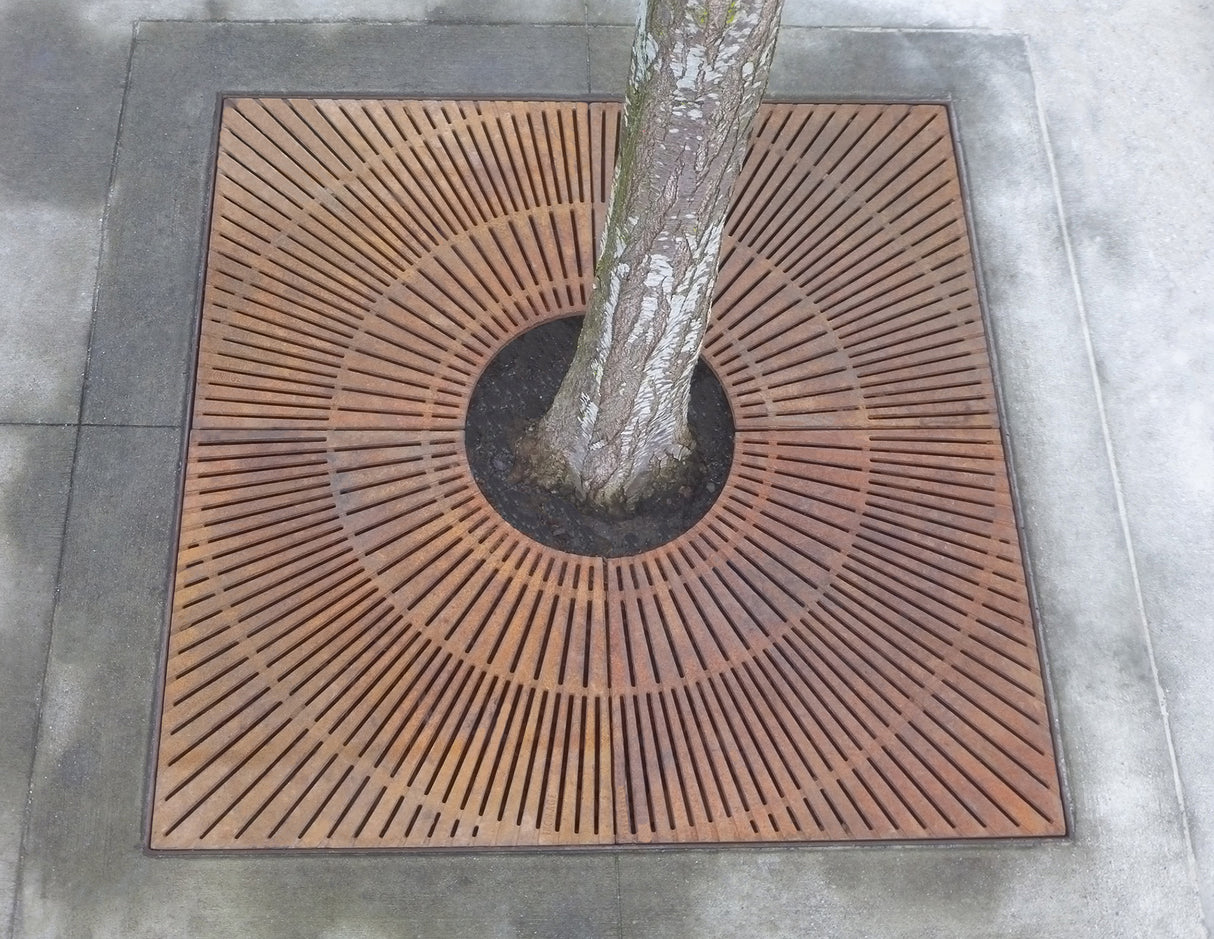
A CORONA 4x4 tree grate is designed to cover the open soil area around the base of a tree while still providing space for air, water, and tree growth. The 4x4 dimensions make it suitable for many streetscape and landscape applications where a defined tree opening is required.
Tree grates are generally installed flush with nearby paving. This creates a more consistent surface around the planting area while reducing direct pedestrian contact with the soil.
The design also helps distinguish the tree pit from the surrounding walkway without requiring raised borders that may interrupt pedestrian movement.
Why the 4x4 Size Is Common in Urban Spaces
A 4x4-foot format provides enough surface coverage for many urban tree pits while remaining compact enough for sidewalks, plazas, and pedestrian corridors.
The dimensions can work well in areas where space is limited but adequate room still needs to be provided around the trunk. The final suitability depends on the tree species, expected trunk growth, soil requirements, pavement design, and local landscape standards.
Protecting Tree Roots From Foot Traffic
One of the primary reasons to use a tree grate is to reduce direct foot traffic over exposed soil.
Without protection, pedestrians may repeatedly walk across the tree pit. Over time, this can compress the soil surrounding the roots. Compacted soil may reduce air movement and affect the ability of water to penetrate the root zone.
A tree grate creates a physical barrier between pedestrian activity and the soil below while maintaining openings that allow environmental access to the planting area.
Reducing Soil Compaction
Healthy urban tree growth depends partly on maintaining appropriate soil conditions. Repeated pressure from people, bicycles, maintenance equipment, or carts can make soil denser.
By covering the tree pit, the grate helps redirect pedestrian pressure onto the structural grate rather than directly onto the soil. This can contribute to better long-term management of the planting area.
Improving Pedestrian Footing Around Trees
Open tree pits can interrupt an otherwise continuous pavement surface. Loose soil, mulch, exposed roots, or uneven edges may create uncomfortable walking conditions.
Tree grates help provide a more defined surface around the trunk. When installed correctly and maintained properly, they can make pedestrian areas easier to navigate.
This is particularly relevant in high-traffic environments such as:
-
Downtown sidewalks
-
Public plazas
-
Transit areas
-
Shopping districts
-
University campuses
-
Parks and promenades
-
Commercial developments
A more consistent walking surface can also improve the appearance and organization of the overall streetscape.
Supporting Water and Air Movement
Although tree grates cover much of the tree pit, their openings are designed to allow water and air to reach the soil.
Rainwater can pass through the grate rather than being completely diverted away from the planting area. Similarly, the open design allows some air circulation around the root zone.
The amount of water reaching the soil will still depend on factors such as drainage design, surrounding pavement slope, irrigation systems, soil structure, and the grate configuration.
Maintaining Access to the Tree Pit
Tree pits may occasionally need inspection, cleaning, soil treatment, irrigation adjustments, or other maintenance.
Tree grate systems should therefore be incorporated into a broader maintenance plan. Landscape teams may need access beneath or around the grate depending on the installation method and tree requirements.
Creating a Cleaner Streetscape Appearance
Exposed planting areas can collect litter, displaced mulch, leaves, and other debris. They may also become uneven after heavy use or rainfall.
A structured grate provides a clearly defined boundary around the tree and creates a more finished transition between planting areas and hardscape surfaces.
This can be particularly useful in formal commercial, institutional, and municipal landscapes where consistent detailing is important.
Tree grates can also complement surrounding paving patterns, benches, bollards, lighting fixtures, and other streetscape elements when selected as part of a coordinated design.
Allowing Space for Tree Growth
Trees continue to develop after installation, so the opening around the trunk must accommodate future growth.
A tree grate should never restrict or press against an expanding trunk. Landscape planners should evaluate the mature characteristics of the selected tree species and consider how the opening will be managed over time.
Periodic inspection is important because a grate that fits correctly at installation may require adjustment as the tree matures.
Planning for Long-Term Maintenance
Long-term tree grate maintenance may include:
-
Checking clearance around the trunk
-
Removing accumulated debris
-
Inspecting the grate for movement
-
Monitoring surrounding pavement
-
Checking soil and drainage conditions
-
Adjusting the opening as the tree grows
Including these tasks in routine landscape maintenance can help reduce future conflicts between the tree, grate, and surrounding pavement.
Installation Considerations for CORONA 4x4 Tree Grates
Proper installation is important for both tree protection and pedestrian use.
The surrounding support structure should be designed to carry anticipated loads without transferring unnecessary pressure to the root zone. The grate should also align correctly with the adjoining pavement to reduce uneven transitions.
Site planners should consider drainage, accessibility requirements, tree species, root development, pavement materials, and expected pedestrian traffic before installation.
Local codes and project-specific design standards should also be reviewed.

Choosing Tree Grates for Urban Landscape Projects
Tree grate selection should be based on more than appearance alone. The grate needs to suit the planting environment, tree dimensions, surrounding pavement, maintenance requirements, and expected level of public use.
For a busy pedestrian location, durability and surface stability may be key considerations. In landscaped courtyards or institutional settings, visual coordination with surrounding architectural elements may also carry greater importance.
The CORONA 4x4 format can provide a practical solution where designers need to maintain a defined tree pit while preserving usable space around the planting area.
Conclusion
CORONA 4x4 Tree Grates: Protecting Urban Trees & Footing reflects the dual purpose of tree grate systems in public landscapes. They help shield tree pits from direct pedestrian pressure while creating a more consistent surface around urban planting areas.
When properly specified, installed, and maintained, a 4x4 tree grate can support soil protection, pedestrian movement, drainage access, and organised streetscape design. Long-term planning remains essential, particularly as the tree grows and site conditions change over time.
